
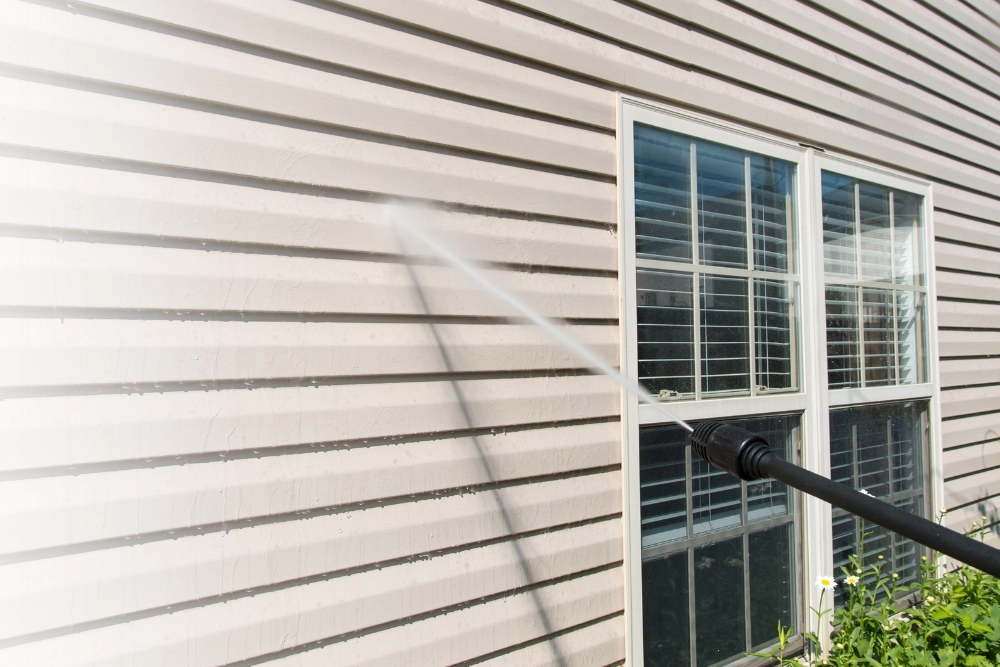
The best soft wash solution for a house is not one universal chemical mixture. The right solution depends on the exterior material, the type of staining, and how heavily the surface is soiled.
For organic buildup such as mildew and algae, professional soft-washing systems commonly use a properly diluted sodium-hypochlorite-based cleaner with water and a compatible surfactant. The surfactant helps the solution spread across the surface and remain in contact with the buildup long enough to work.
The appropriate solution strength should be adjusted for the material being cleaned rather than using the same mixture on every surface.
That surface-specific approach is especially important for Phoenix-area homes, where stucco and painted exterior finishes are common.
What Makes a Good House Soft Wash Solution
A professional house-washing solution needs to do more than loosen visible dirt.
Soft washing uses cleaning chemistry to address contaminants while relying on relatively low water pressure for application and rinsing.
Depending on the condition of the home, a professional soft wash solution may involve three basic components:
- Water
- An appropriate cleaning agent for the type of contamination
- A compatible surfactant or detergent that helps the solution spread and remain on the surface
For organic staining, sodium hypochlorite is commonly used within the professional soft-washing industry because it can help address mold, mildew, algae, and similar organic material.
That does not mean stronger is automatically better. The appropriate chemistry depends on what is being cleaned and the condition of the surface.
Sodium Hypochlorite in Soft Washing
Sodium hypochlorite is the active ingredient found in many bleach products, and it is commonly associated with professional soft washing for organic staining.
Its role in exterior cleaning is different from simply trying to remove buildup with water pressure.
A properly selected cleaning solution helps break down organic material so the surface can be rinsed using lower pressure.
This can be useful for exterior issues such as:
- Algae
- Mildew
- Mold-related surface growth
- Dark organic streaking
- Other types of biological buildup
Our house and soft washing services follow this broader approach. We evaluate the surface, apply a paint-friendly cleaning solution to help break down dirt and organic staining, and rinse at a pressure appropriate for stucco, siding, and painted finishes.
The exact cleaning strength needed for a home depends on the material and condition of the exterior.
Why Surfactants Are Used in Soft Wash Solutions
A surfactant helps a cleaning solution spread across and cling to a surface instead of immediately running off.
This gives the cleaning agents more contact time with the staining they are intended to treat.
Professional soft-washing products may use bleach-compatible surfactants and detergents designed for different types of exterior contamination.
This distinction matters because not every dirty or discolored area on a house is caused by the same thing.
A solution designed for algae or mildew may not be the most appropriate treatment for mineral deposits, ordinary desert dust, grease, or other types of buildup.
Identifying what is actually on the surface is an important part of selecting the right cleaning approach.
Soft Washing Solution for Stucco Homes
Stucco deserves particular attention in the Phoenix area.
Its textured and porous surface can collect dust and show staining over time. Using excessive pressure may also create a risk of damaging the texture or forcing water into areas where it should not go.
For stucco, the goal is not simply to use the strongest house wash solution available.
A more appropriate approach is to match:
- The cleaning agent to the type of staining
- The solution strength to the surface condition
- The application method to the exterior finish
- The rinse pressure to the material
Older painted stucco may also require a different approach from newer or unpainted exterior materials.
Painted Siding and Exterior Finishes Need a Gentler Approach
Painted exterior surfaces introduce another consideration.
A cleaning solution that is unnecessarily aggressive can create problems for paint, nearby metals, landscaping, and other surrounding materials.
Our soft-washing process begins with evaluating the exterior before applying a cleaning solution.
We identify the surface type and areas with heavier staining, apply a paint-friendly solution, and complete the cleaning with lower-pressure rinsing appropriate for the material.
This is one reason there is no single "best" soft wash formula for every house.
The most appropriate cleaning solution is one that addresses the contamination while remaining suitable for the surface being cleaned.
Arizona Dust and Organic Growth Require Different Cleaning Approaches
Phoenix-area homes are exposed to environmental conditions that can affect exterior walls in different ways.
Long dry periods allow desert dust to accumulate, while shaded walls, landscaping, irrigation, and areas that retain moisture may develop different types of staining.
Monsoon conditions can also leave behind dirt and debris on exterior surfaces.
This distinction matters because desert dust is not the same as algae, mildew, or other organic buildup.
A professional should identify what is actually causing the discoloration before deciding which cleaning solution or method is appropriate.
For example, a dusty wall may primarily need surface cleaning, while organic growth may require a cleaning agent designed to treat biological contamination.
Stronger Soft Wash Chemicals Are Not Always Better
Using a stronger cleaning solution does not automatically produce a better result.
The cleaning strength should be appropriate for both the surface and the severity of the buildup.
For lightly soiled exterior materials, a milder approach may be sufficient. Heavier organic contamination may require a different treatment.
Using only the amount of cleaning strength necessary can also help reduce unnecessary exposure to surrounding materials and landscaping.
For homeowners, the more useful question is not:
"What is the strongest soft wash solution?"
Instead, consider:
"What cleaning solution is appropriate for this surface and this type of buildup?"
That distinction is one of the most important parts of professional soft washing.
Protecting Landscaping During Soft Washing
Plants, grass, and landscaping around the home should also be considered before exterior cleaning begins.
Our soft-washing process includes protecting or wetting nearby landscaping before detergent application.
Additional rinsing may also be used before, during, or after cleaning depending on the property.
This is particularly relevant for Phoenix-area homes where exterior walls may sit close to:
- Desert landscaping
- Shrubs
- Ornamental plants
- Grass
- Irrigation systems
- Decorative rock
- Outdoor living areas
Exterior cleaning should consider the entire area surrounding the surface being washed, not just the wall itself.
Soft Washing vs. Pressure Washing
Soft washing and pressure washing are different cleaning approaches.
Soft Washing
Soft washing relies more heavily on cleaning solutions and lower water pressure.
It is generally better suited to surfaces such as:
- Stucco
- Painted siding
- Exterior trim
- Delicate exterior finishes
- Aging painted surfaces
Pressure Washing
Pressure washing relies more heavily on mechanical cleaning force.
It is generally better suited to durable surfaces such as:
- Concrete
- Driveways
- Walkways
- Patios
- Some hardscape surfaces
Our house and soft washing services are designed for exterior finishes that benefit from a gentler approach.
For harder exterior surfaces, our pressure washing services may be more appropriate.
Choosing the correct cleaning method is just as important as choosing the cleaning solution.
Can You Make a Soft Wash Solution Yourself?
Homeowners can find many soft-washing recipes online, but a generic mixture is not necessarily appropriate for every house.
Several factors need to be considered, including:
- Chemical concentration
- Exterior surface type
- Paint condition
- Type of contamination
- Landscaping protection
- Nearby metal surfaces
- Runoff
- Application method
- Safe chemical handling
There is also an important safety consideration.
Bleach or sodium-hypochlorite products should never be mixed with other household cleaners unless the product directions specifically establish that they are compatible.
Mixing bleach with certain cleaners can produce dangerous fumes.
If you are unsure what type of contamination is present or whether a particular cleaner is suitable for your stucco, siding, paint, landscaping, or surrounding materials, professional evaluation may be the safer option.
Choosing the Right Soft Wash Solution for a Phoenix-Area Home
For most homeowners, choosing the right soft wash solution is less about finding one specific recipe and more about matching the cleaning process to the property.
Several factors should be considered.
Exterior Material
Stucco, painted siding, trim, and other exterior finishes may require different cleaning approaches.
Type of Buildup
Dust, algae, mildew, mineral deposits, and general grime do not necessarily respond to the same cleaning chemistry.
Condition of the Surface
Older, weathered, or deteriorating finishes may require additional care.
Surrounding Property
Landscaping, windows, metals, irrigation components, and nearby exterior materials should also be considered.
Appropriate Water Pressure
Soft washing allows the cleaning solution to perform much of the work rather than relying on excessive water pressure.
For homes in the city, our exterior cleaning services in Phoenix provide additional information about cleaning stucco, painted surfaces, and other exterior materials common throughout the Valley.
Professional House Soft Washing in Phoenix and the Valley
If your home's exterior has dark streaking, mildew, organic buildup, or accumulated grime, identifying the surface and the cause of the staining is an important first step.
Our team provides house and soft washing for stucco, painted siding, exterior finishes, and trim throughout Phoenix and the surrounding Valley.
We evaluate the surface, protect nearby landscaping, apply an appropriate paint-friendly cleaning solution, and rinse using lower pressure suitable for the exterior material.
Call (623) 512-1284 or request a quote through our website to discuss your property's exterior cleaning needs.
Frequently Asked Questions
What chemical is used to soft wash a house?
Professional soft-washing systems commonly use sodium hypochlorite for certain types of organic staining, along with water and a compatible surfactant or detergent.
The appropriate product and concentration depend on the surface and type of contamination being treated.
Does soft washing use bleach?
Many professional soft-washing systems use sodium hypochlorite, which is the active ingredient found in bleach, particularly when treating organic growth such as algae and mildew.
That does not mean undiluted household bleach should simply be applied to a house.
Product selection, concentration, application, surface compatibility, and surrounding materials all need to be considered.
Is soft washing safe for stucco?
Soft washing can be well suited to stucco because it relies on cleaning chemistry and lower water pressure rather than using high-pressure water to remove buildup.
The cleaning solution and application method should still be selected according to the condition and finish of the stucco.
Is soft washing safe for painted surfaces?
Soft washing can be appropriate for painted surfaces when the cleaning solution and water pressure are suitable for the finish.
Our process begins with evaluating the exterior and uses paint-friendly cleaning solutions before completing a lower-pressure rinse.
What is the difference between soft washing and pressure washing?
Soft washing relies more heavily on cleaning solutions and lower water pressure for exterior surfaces that require a gentler approach.
Pressure washing uses greater mechanical force and is generally better suited to durable materials such as concrete, walkways, patios, and driveways.
Can soft washing damage a house?
Improper chemicals, excessive concentrations, unsuitable pressure, or failure to protect surrounding materials can create risks.
The cleaning solution and method should be matched to the exterior surface rather than treating every part of a house the same way.
Need exterior cleaning in Phoenix or the Valley?
Request a free quote from Phoenix Precision Pressure Washing, or browse all our services.